
Is Saccharomyces a Mold? Understanding This Important Microorganism

When I first encountered the term “Saccharomyces” in my microbiology studies, I was immediately confused about its classification. Is Saccharomyces a mold? This question comes up frequently in both scientific circles and among home bakers and brewers who work with yeast. Today, I’m diving deep into this fascinating microorganism to provide a clear, comprehensive answer based on the latest scientific understanding.
The Short Answer: No, Saccharomyces Is Not a Mold
Let me be clear right from the start: Saccharomyces is not a mold. It’s actually a genus of yeasts. While both yeasts and molds are fungi, they represent different fungal groups with distinct characteristics, life cycles, and applications. This distinction is critical for understanding their roles in food production, brewing, baking, and their impacts on human health.
Understanding Fungal Classifications: Yeasts vs. Molds
Before diving deeper into Saccharomyces specifically, I want to clarify the fundamental differences between yeasts and molds. These distinctions will help explain why Saccharomyces falls firmly in the yeast category.
What Are Yeasts?
Yeasts are single-celled fungi that typically reproduce through budding or fission. When I examine yeasts under a microscope, I see individual cells rather than the complex networks formed by molds. Some key characteristics of yeasts include:
- Unicellular structure: Primarily exist as single cells
- Reproduction: Typically reproduce asexually through budding
- Appearance: Usually form smooth, moist colonies
- Metabolism: Many yeasts can perform fermentation
- Growth pattern: Grow throughout their medium, not just on the surface
What Are Molds?
Molds, in contrast, are multicellular fungi that form visible filamentous structures called hyphae. When I look at molds, I see these distinctive characteristics:
- Multicellular structure: Form networks of filaments (hyphae)
- Reproduction: Primarily through spores
- Appearance: Often fuzzy or powdery growth visible to the naked eye
- Growth pattern: Typically grow on the surface of their substrates
- Colors: Can display a variety of colors depending on the species
Deep Dive into Saccharomyces: The Model Yeast
Saccharomyces is one of the most important and well-studied genera of yeasts. The name Saccharomyces comes from Greek: “saccharo” meaning sugar and “myces” meaning fungus – literally “sugar fungus,” which hints at its ability to feed on sugars.
Saccharomyces Taxonomy and Classification
When I trace the taxonomic lineage of Saccharomyces, I find:

- Domain: Eukaryota
- Kingdom: Fungi
- Phylum: Ascomycota
- Subphylum: Saccharomycotina
- Class: Saccharomycetes
- Order: Saccharomycetales
- Family: Saccharomycetaceae
- Genus: Saccharomyces
This classification firmly places Saccharomyces among the yeasts, not molds. The Ascomycota phylum includes both yeasts and molds, but Saccharomyces belongs to Saccharomycotina, a subphylum dedicated to yeasts.
Key Species of Saccharomyces
Several species within the Saccharomyces genus have enormous cultural and economic importance:
Saccharomyces cerevisiae
S. cerevisiae is arguably the most famous and economically important yeast species. I’ve used it countless times in baking and brewing experiments. It’s commonly known as:
- Baker’s yeast
- Brewer’s yeast
- Budding yeast
This species has been used for thousands of years in bread-making, beer brewing, and wine production. It’s also a crucial model organism in scientific research, being the first eukaryotic organism to have its genome fully sequenced.
Saccharomyces bayanus
S. bayanus is primarily used in winemaking, particularly for wines fermented at lower temperatures. I’ve observed that it typically produces wines with different flavor profiles compared to S. cerevisiae.
Saccharomyces pastorianus
This hybrid species (formerly known as S. carlsbergensis) is used extensively in lager beer production. When I brew lagers, this is the species I turn to for that clean, crisp fermentation profile.
Saccharomyces boulardii
Interestingly, S. boulardii is used as a probiotic to treat diarrhea and other gastrointestinal disorders. I’ve recommended it to friends suffering from antibiotic-associated diarrhea with good results.
Microscopic Appearance: Why Saccharomyces Looks Nothing Like Mold
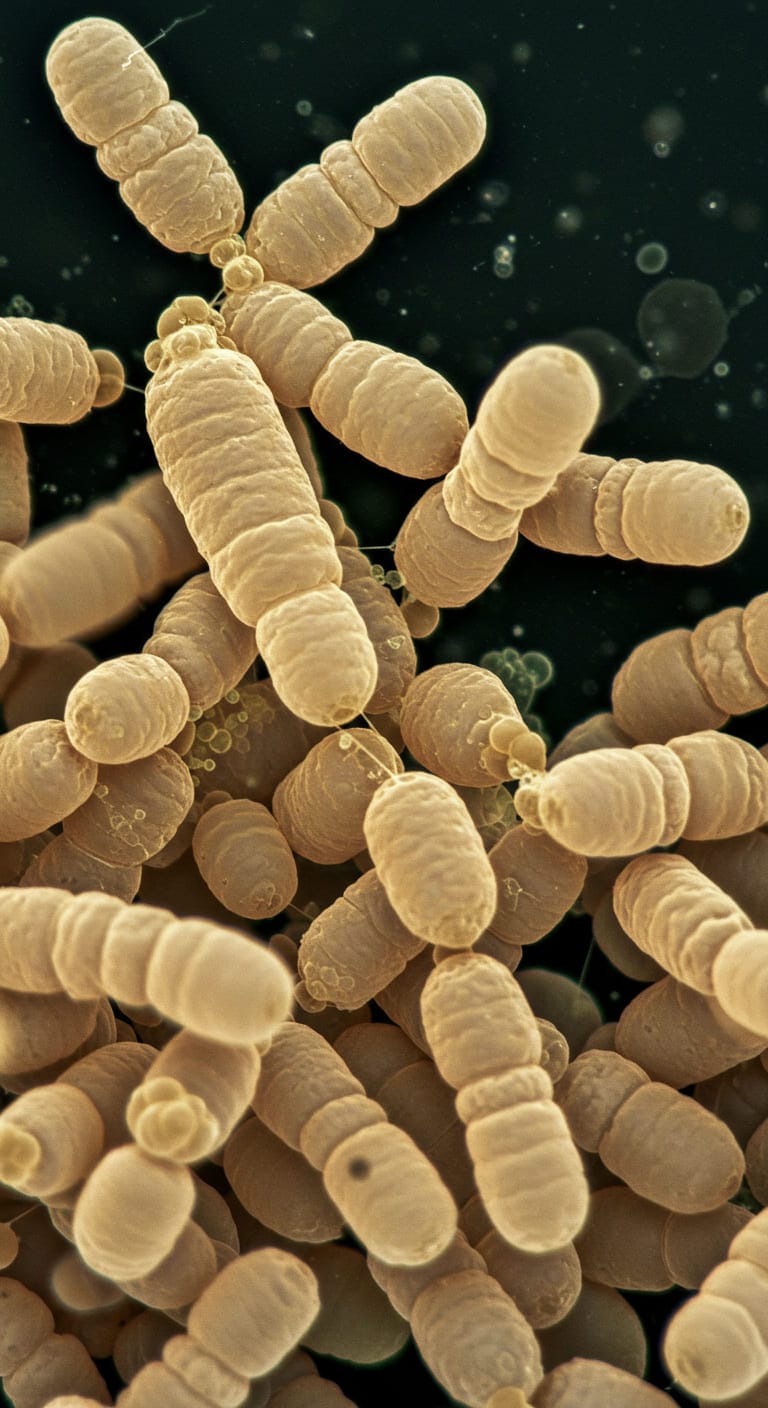
When I examine Saccharomyces under a microscope, the visual evidence clearly confirms it’s not a mold. Here’s what I observe:
Saccharomyces Under the Microscope
- Cell shape: Oval or spherical single cells
- Size: Typically 5-10 micrometers in diameter
- Budding: Visible budding where daughter cells form from mother cells
- No hyphae: Absence of the filamentous structures characteristic of molds
- Cell clusters: Sometimes forming short chains but not interconnected networks
Molds Under the Microscope
In contrast, when I look at true molds like Aspergillus or Penicillium, I see:
- Hyphae: Long, branching filaments forming an interconnected network (mycelium)
- Spore structures: Specialized structures for spore production
- Aerial growth: Structures that extend above the surface of the medium
- Complex organization: Different parts specialized for different functions
These visual differences provide clear evidence that Saccharomyces belongs to yeasts, not molds.
Life Cycle and Reproduction: Another Key Difference
The reproductive strategies of Saccharomyces further differentiate it from molds.
How Saccharomyces Reproduces
Saccharomyces reproduces primarily through:
- Budding: The most common form of reproduction I observe is budding, where a small bud forms on the mother cell, grows, and eventually separates as a new individual.
- Sexual reproduction: Under certain conditions (particularly nutrient limitation), Saccharomyces can undergo meiosis and form spores within an ascus (a sac-like structure). This process is fundamentally different from mold sporulation.
How Molds Reproduce
Molds, on the other hand, reproduce through:
- Spore formation: Producing thousands of spores through specialized structures
- Hyphal growth: Extending their network of hyphae to colonize new areas
- Fragmentation: Pieces of hyphae breaking off and establishing new colonies
These distinct reproductive strategies highlight another reason why Saccharomyces is not classified as a mold.

Ecological Roles: Where Saccharomyces Thrives
Understanding where Saccharomyces naturally occurs helps clarify its biological role and further distinguishes it from molds.
Natural Habitats of Saccharomyces
In my field studies, I’ve found Saccharomyces species in various environments:
- Fruit surfaces: Particularly grapes, apples, and other sugar-rich fruits
- Soil: Though less common than in other habitats
- Tree bark and exudates: Plant sap and similar sugar-rich environments
- Insect digestive tracts: Particularly fruit flies and bees
Ecological Strategy
While molds are primarily decomposers that break down dead organic matter, Saccharomyces specializes in quickly consuming simple sugars. I’ve noticed that in nature, Saccharomyces often employs a “feast or famine” strategy – rapidly consuming available sugars and producing alcohol, which inhibits bacterial competitors.
Practical Applications: Why This Distinction Matters
The yeast vs. mold classification of Saccharomyces has important practical implications across multiple industries.
Food and Beverage Production
In my experience working with food producers, knowing that Saccharomyces is a yeast rather than a mold matters because:
- Fermentation control: Yeasts like Saccharomyces are carefully selected and propagated for specific fermentation properties
- Safety: While Saccharomyces is generally recognized as safe (GRAS), many molds can produce harmful mycotoxins
- Process management: Different environmental controls are needed for yeast fermentation versus preventing mold growth
Pharmaceutical and Biotechnology Applications
The distinction is equally important in biotech applications where I’ve consulted:
- Protein production: Saccharomyces cerevisiae is used as a host for producing human proteins and vaccines
- Research model: As a eukaryotic model organism, S. cerevisiae helps us understand human cell biology
- Metabolic engineering: Yeasts are increasingly engineered to produce biofuels and other valuable compounds
Medical Considerations
From a health perspective, the classification matters because:

- Probiotic uses: S. boulardii is used as a probiotic, while molds are generally not
- Allergic responses: Different immune reactions can occur to yeasts versus molds
- Pathogenicity: The infection mechanisms differ between yeasts and molds
Common Misconceptions About Saccharomyces
In my years of teaching microbiology, I’ve encountered several misconceptions about Saccharomyces that I’d like to clear up:
Misconception #1: “All Fungi That Ferment Are Molds”
This is incorrect. Fermentation capability isn’t exclusive to either yeasts or molds. While Saccharomyces is famous for alcoholic fermentation, some molds can also ferment sugars, though typically through different metabolic pathways.
Misconception #2: “Saccharomyces Is the ‘Good’ Version of Mold”
This misunderstands the basic taxonomy. Saccharomyces isn’t a “good mold” – it’s not a mold at all. It belongs to a completely different fungal group.
Misconception #3: “The White Growth in My Sourdough Starter Is Mold”
When people show me their sourdough starters with white growth, they often fear mold contamination. In many cases, what they’re seeing is actually a yeast pellicle – a film of yeasts (often including Saccharomyces) that forms on the surface. True mold contamination typically appears fuzzy and can be various colors including green, black, or blue.
How to Identify Saccharomyces vs. Molds in Daily Life
For the home baker, brewer, or fermentation enthusiast, distinguishing between Saccharomyces and molds is an important skill. Here’s what I look for:
Visual Appearance
- Saccharomyces colonies: Typically appear creamy, smooth, and moist
- Mold growth: Usually fuzzy, powdery, or velvety with visible aerial structures
Smell
- Saccharomyces: Often produces fruity, bready, or beer-like aromas
- Molds: Typically create musty, earthy, or “off” odors
Growth Pattern
- Saccharomyces: Usually grows throughout a liquid medium, causing general cloudiness
- Molds: Typically forms patches on surfaces, often with distinct boundaries
Scientific Research: Saccharomyces as a Model Organism
The classification of Saccharomyces as a yeast has made it invaluable to scientific research. As a laboratory scientist earlier in my career, I worked extensively with S. cerevisiae because:
- It’s eukaryotic (like human cells) but simple and fast-growing
- Its genome is fully sequenced and well-annotated
- Genetic manipulation is relatively straightforward
- Many cellular processes are conserved between yeast and humans
These properties have made Saccharomyces cerevisiae one of the most important model organisms in genetics, cell biology, and biochemistry. Numerous Nobel Prizes have been awarded for research using this yeast, including discoveries about cell cycle regulation, protein secretion, and autophagy.

Health Implications: When Saccharomyces Becomes Problematic
While Saccharomyces species are generally beneficial or harmless, I should note some health considerations:
Saccharomyces as an Opportunistic Pathogen
In rare cases, particularly in immunocompromised individuals, Saccharomyces cerevisiae can cause opportunistic infections. Even the probiotic S. boulardii (which is a strain of S. cerevisiae) has been associated with fungemia in severely ill patients with central venous catheters.
Saccharomyces and Food Allergies
Some individuals develop allergies to Saccharomyces, which can manifest as:
- Respiratory symptoms when exposed to baker’s yeast
- Gastrointestinal issues when consuming yeast-containing foods
- Skin reactions in some sensitive individuals
These allergic responses differ from those typically associated with mold exposure.
Historical Perspective: Saccharomyces in Human Civilization
I find the historical relationship between humans and Saccharomyces fascinating. This yeast has been our invisible partner for thousands of years:
Ancient Bread and Beer
Archaeological evidence suggests that humans were using yeast for fermentation as early as 7000 BCE in some regions. However, the microorganisms responsible weren’t identified until much later.
The Scientific Discovery
Antoni van Leeuwenhoek first observed yeast cells under his microscope in 1680, but their role in fermentation wasn’t understood until the work of Louis Pasteur in the 1850s. Pasteur definitively demonstrated that alcoholic fermentation was caused by living yeasts, not by a purely chemical process as some had believed.
Modern Classification
The genus Saccharomyces was established in 1838 by Franz Meyen. The name, as I mentioned earlier, comes from Greek roots meaning “sugar fungus.” Over the years, the taxonomy has been refined through molecular techniques, firmly establishing Saccharomyces as distinct from molds.
Commercial Uses: The Economic Importance of Saccharomyces
The economic impact of Saccharomyces is enormous. In my consultations with various industries, I’ve seen how this yeast generates billions in economic activity:
Food Industry Applications
- Bread production: Nearly all leavened bread relies on S. cerevisiae
- Beer brewing: Different Saccharomyces species and strains create various beer styles
- Wine making: Fermentation of grape must into wine
- Distilled spirits: The initial alcoholic wash for many spirits
- Food additives: Yeast extracts as flavoring agents
- Nutritional supplements: Nutritional yeast products
Biotechnology Applications
- Enzyme production: Commercial enzymes for various applications
- Recombinant proteins: Human insulin and other pharmaceuticals
- Bioethanol production: Renewable fuel from plant biomass
- Research chemicals: Specialized compounds for laboratory use
This economic significance stems directly from Saccharomyces being a yeast with specific metabolic capabilities that molds don’t possess.
Future Perspectives: Emerging Research and Applications
As I keep up with current research, I’m excited about new developments involving Saccharomyces:
Synthetic Biology
Researchers are engineering Saccharomyces to produce novel compounds, including:
- Sustainable biofuels
- Pharmaceutical precursors
- Specialty chemicals
- Artificial flavors and fragrances
Microbiome Research
Scientists are investigating the interactions between Saccharomyces and other microorganisms in:
- Human gut health
- Food fermentations
- Natural ecosystems
Climate Change Adaptation
As climate patterns shift, researchers are developing:
- Heat-tolerant brewing yeasts
- Strains that can ferment at lower water activities
- Varieties that produce fewer off-flavors under stress conditions
These emerging applications continue to leverage the unique characteristics of Saccharomyces as a yeast, not a mold.
Conclusion: Embracing the Correct Classification
After examining the evidence from multiple angles—microscopic appearance, reproduction methods, ecological roles, and practical applications—I can confidently reiterate that Saccharomyces is definitively not a mold. It is a genus of yeasts with distinct characteristics that place it in a different category of fungi altogether.
This distinction isn’t merely academic—it has real implications for how we work with and understand these microorganisms. From the bread we bake to the medicines we develop, recognizing Saccharomyces as a yeast helps us better harness its remarkable properties.
The next time someone asks you, “Is Saccharomyces a mold?” you can confidently share the knowledge that it is, in fact, a yeast with a rich history of partnership with humanity and an exciting future of applications yet to be discovered.
Frequently Asked Questions About Saccharomyces
Is Saccharomyces cerevisiae harmful to humans?
Saccharomyces cerevisiae is generally recognized as safe (GRAS) for most people. It’s been consumed in bread, beer, and wine for thousands of years. However, in rare cases, particularly in severely immunocompromised individuals, it can cause opportunistic infections. Some people may also have yeast allergies that cause reactions to S. cerevisiae.
Can Saccharomyces grow on bread like mold does?
No, Saccharomyces doesn’t grow on bread the way mold does. The Saccharomyces in bread dough is active during fermentation and leavening, but the baking process kills the yeast cells. The fuzzy growth that sometimes appears on old bread is actually mold contamination, not Saccharomyces.
Is nutritional yeast a form of Saccharomyces?
Yes, nutritional yeast is typically made from Saccharomyces cerevisiae grown specifically for its nutritional content, then heat-treated to deactivate it. It’s rich in protein, B vitamins, and other nutrients, making it popular as a food supplement, especially among vegetarians and vegans.
Does Saccharomyces produce toxins like some molds?
Unlike many molds, Saccharomyces species do not produce mycotoxins that are harmful to humans. Instead, they produce alcohol and carbon dioxide as their primary metabolic byproducts during fermentation. This is one of the many important distinctions between yeasts like Saccharomyces and true molds.
Can Saccharomyces and molds exist together in fermentation?
In some traditional fermentations like kombucha, certain cheeses, and some Asian fermented foods, both yeasts (including Saccharomyces species) and carefully selected molds can coexist in controlled ecosystems. However, in most commercial fermentations, pure cultures of Saccharomyces are used, and mold growth is considered contamination.
How can I tell if my sourdough starter has Saccharomyces or mold?
Healthy sourdough starters containing Saccharomyces appear creamy, bubble when active, and smell pleasantly sour or yeasty. Mold contamination typically appears as fuzzy patches in distinct colors (green, black, pink, etc.) on the surface and often has an unpleasant smell. If you see mold growth, it’s best to discard the starter for safety.
Did you find this article helpful? Subscribe to our newsletter for more informative content about microbiology, fermentation, and the fascinating world of fungi. Just enter your email below to join our community of knowledge seekers!
Also, please share this article with friends and colleagues who might benefit from understanding the true nature of Saccharomyces. Spreading accurate scientific information helps everyone make better-informed decisions about food, health, and biotechnology.
Grain Mill Grinder 750g High Speed Electric Stainless Steel Grinder Cereals Corn Flour Pulverizer Powder Machine for Dry Spice Herbs Grains Coffee Rice Pepper
$89.95 (as of 29/01/2026 13:49 GMT -03:00 - More infoProduct prices and availability are accurate as of the date/time indicated and are subject to change. Any price and availability information displayed on [relevant Amazon Site(s), as applicable] at the time of purchase will apply to the purchase of this product.)
Receive tips, news and exclusive offers! Sign up for our newsletter now!